Irving Park United Methodist Church traces its beginnings to 1888, when the First Methodist Episcopal Church of Irving Park was organized with twenty-seven charter members. What began as a small gathering of neighbors has endured for more than thirteen decades as a steadfast community of faith on Chicago's northwest side.
A Cottage Prayer Meeting
The congregation grew out of a cottage prayer meeting started by a devout neighbor from a nearby part of the city. A young seminary student was invited to lead these gatherings, and the church was formally organized during his early ministry. Like so many enduring institutions, it began modestly — a handful of devoted people meeting in homes, drawn together by a shared longing to worship and to build something lasting.
Finding a Church Home
Looking for a church home of their own, the early members purchased a lot on North Forty-First Court, adjoining the Irving Park Grade School. That property was later sold to the Board of Education, and two corner lots — each measuring one hundred by one hundred seventy-three feet — were secured at the present location, at Keeler Avenue and Grace Street (then known as North Forty-Second Avenue).
On that corner, a "neat building of wood with a spire" was erected at a cost of $8,000 and dedicated on January 3, 1892. The building carried a $2,500 mortgage for twelve years until faithful subscriptions finally liquidated the debt on May 27, 1900 — a milestone celebrated by a congregation that had given sacrificially to make a permanent home possible.
Building for a Growing Congregation
As the neighborhood and the congregation grew, the original wooden church soon proved too small. Not yet financially strong enough to build a complete new church all at once, the members made a characteristically practical and faithful decision: they would build in stages. The Chapel and Sunday-school section came first. Ground was broken on June 1, 1907, and the Chapel was dedicated on February 16, 1908, at a cost of $17,000.
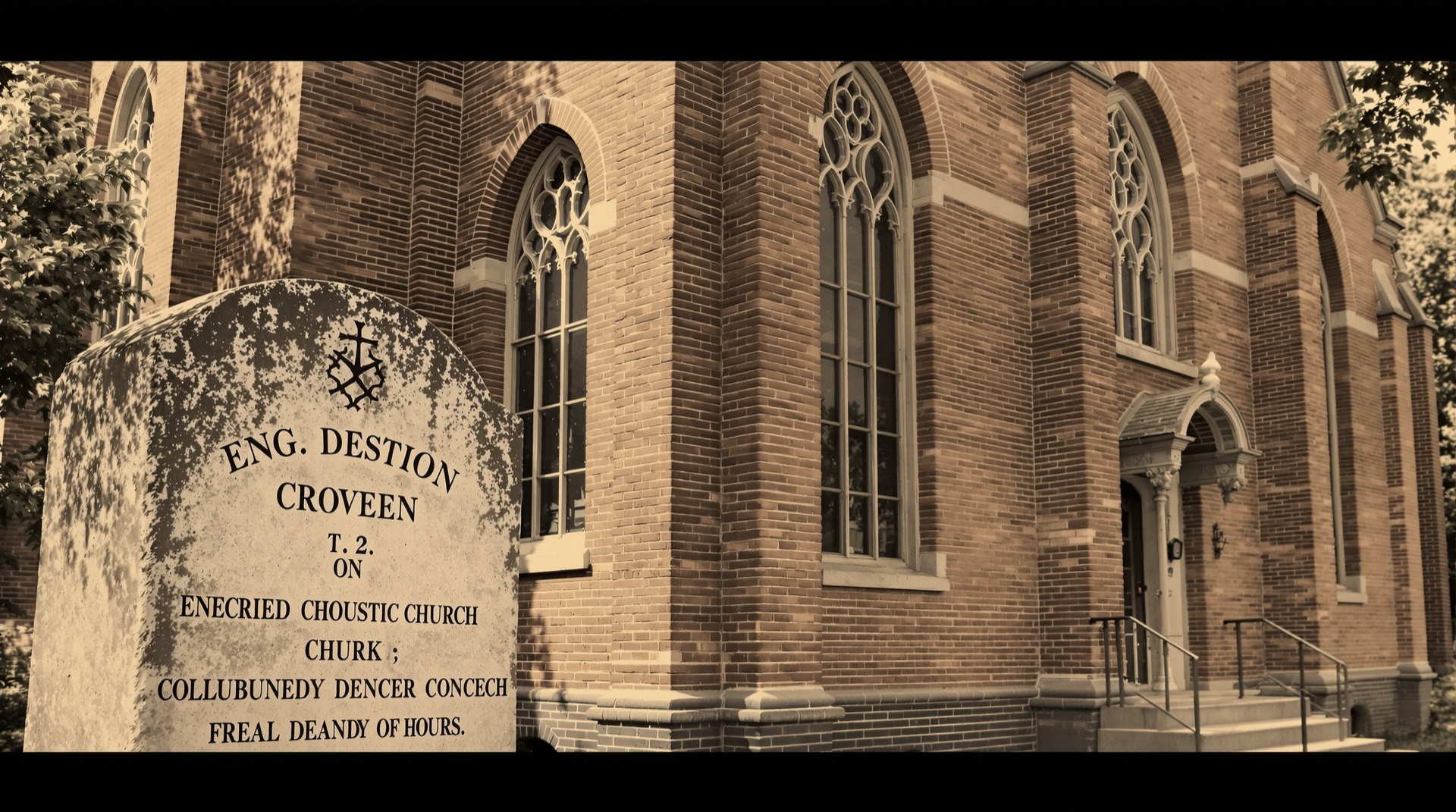
With the Chapel in use, the congregation pledged anew toward the larger auditorium. Its corner stone was laid on June 1, 1912, and the building program carried forward through the early decades of the twentieth century. The brick structure that resulted has stood at the corner of Keeler and Grace ever since — a familiar landmark in Old Irving Park and a visible sign of generations of commitment.
A Congregation Shaped by Its Neighborhood
Across the twentieth century, the church mirrored the life of the surrounding community. Irving Park developed from a railroad-suburb settlement into one of Chicago's distinctive northwest-side neighborhoods, and the congregation grew and changed alongside it. Through periods of expansion and challenge, two World Wars, and decades of social change, the church remained a place of worship, education, and service. The Methodist movement to which it belonged eventually became part of the United Methodist Church, formed in 1968, and the congregation carried its heritage forward under that name.
An Enduring Identity
What is most striking about this congregation's long story is the consistency of its character. From its earliest years it has been a community that pairs worship with service, that welcomes newcomers, and that takes seriously the call to love its neighbors. In more recent generations the church embraced its identity as a reconciling and affirming congregation, extending an explicit welcome to people of every background. Yet that hospitality is not new — it is the mature expression of values that have animated this community since twenty-seven people first organized a church in 1888.
To stand in this historic building today is to stand within a story still being told — a story of ordinary people who gathered, gave, and served so that future generations would have a spiritual home. To learn more about the faith that has sustained this community, read what we believe, and to see how that faith takes shape in everyday life, explore our ministries. You can learn more about the broader Methodist heritage through the history of the United Methodist Church.